
Architecture design
Architecture Design
Architecture design with real metal is the use of genuine bronze, copper, brass, zinc, iron or manganese as the visible surface of a facade or interior. VeroMetal® delivers that surface as a cold-workable liquid metal coating applied at 120 to 150 microns, giving architects, interior designers and project developers authentic metal on substrates that could never carry sheet metal.

VeroMetal Copper with green patina, University of Sussex
What Is Architecture Design With Real Metal?
Architecture design with real metal is the discipline of shaping a building envelope and its interior fabric using genuine metallic surfaces rather than metal-effect imitations. Architects value real metal for its warmth, depth, reflectivity and the way it patinates over decades. Foils, laminates and metallic paints reproduce none of that behaviour, because they contain no metal.
VeroMetal® delivers architecture design as a coating system instead of a cladding system. Genuine metal particles are bound in a cold-workable matrix and applied at 120 to 150 microns, roughly 0.12 to 0.15 millimetres. At that thickness a facade panel, column or staircase keeps its original profile, dimension and joinery tolerance while presenting a fully authentic metal face.
How Does VeroMetal Fit Into An Architecture Design Project?
VeroMetal® enters an architecture design project at the finishing stage, after the substrate is built or installed. Certified applicators apply the coating by spray gun, roller, palette knife or pour. VeroMetal cures at room temperature and needs no heat, welding, foundry work or hot-work permits, so it can be applied on site during a phased fit-out or in a panel workshop before delivery.
Specify
The architect selects the metal, the application method and the finishing treatment: sealed for maximum durability, or left open so the surface patinates naturally.
Apply
Spray application produces continuous surfaces across facade panels and full-height walls. Palette knife application builds visible texture and depth for sculptural elements and bespoke joinery.
Finish
The cured surface is ground, brushed, sanded or polished, then patinated or sealed to reach the tone and character set out in the architecture design brief.
Which VeroMetal Finishes Suit Architecture Design?
VeroMetal® offers more than fifteen real metal finishes for architecture design, each with its own colour temperature and patina behaviour. Architects typically anchor a scheme in one primary metal and use a second as accent, so the material language stays coherent from facade to interior detail.

Bronze
Available in classic, aged and middle-aged tones. Bronze is the reference metal for entrance portals, museum joinery and hospitality interiors.

Copper
Raw or pre-patinated. Copper develops a green carbonate layer over roughly 5 to 15 years of atmospheric exposure, exactly as sheet copper does.

Brass
Yellow and brown brass variants for retail architecture, reception halls and contemporary facade detailing.

Gold
Gold, champagne and rose tones for reflective ceilings, feature planes and high-end hospitality architecture.

Zinc
A cool grey tone that reads as traditional architectural zinc, used on rainscreen facades and minimalist envelopes.

Tin
A pale, quiet grey with a soft sheen, suited to fine architectural detailing, signage and interior joinery.

Manganese
Manganese and Gunsmoke are the dark, near-black finishes. The Rabobank facade panels are executed in VeroMetal Gunsmoke on the Ozeon® panel system.

Iron
A raw industrial finish for adaptive reuse and warehouse conversions. Iron develops a living rust patina when left unsealed.
Real metal where solid metal cannot go. Architecture design on curved, perforated, parametric and retrofit geometries that solid sheet metal cannot economically follow.
Architecture Design: VeroMetal vs Solid Sheet Metal
Both deliver a genuine metal surface. The difference is dead load, freedom of form, and how the metal trade is organised across a building programme.
Architecture Design With VeroMetal
VeroMetal coating- Approximately 0.5 kg/m², applied at 120 to 150 microns.
- Up to 90 percent lighter than solid sheet bronze or copper cladding.
- Bonds to aluminium, fibre cement, MDF, HPL, GRC, steel, glass and 3D-printed elements.
- Follows curved, perforated and parametric geometry without fabrication.
- Continuous surfaces with no visible joints, fixings or panel breaks.
- Cures at room temperature, no hot-work permits or specialist ovens.
Solid Sheet Metal
Traditional cladding- Many times heavier for a comparable surface area.
- Requires structural reinforcement, support brackets and fixings.
- Limited to substrates that can carry the dead load.
- Complex geometry needs off-site fabrication and welding.
- Seams and joints interrupt the reading of a continuous surface.
- Retrofit facades often cannot accept the additional load at all.

VeroMetal Copper, green patina, facade plate
Which Architectural Surfaces Accept VeroMetal?
VeroMetal® bonds to aluminium composite panels, fibre cement, MDF, HPL, GRC, steel, concrete, glass and 3D-printed elements. Because the coating adds negligible weight, architects can specify real metal on retrofit facades and lightweight structures where solid sheet metal is not viable at all.
- Facades and building envelopeVentilated facade panels, rainscreen cladding, entrance portals and facade lettering, including the Ozeon® panel system.
- Interior architectureWalls, ceilings and column cladding in hospitality, retail and cultural buildings.
- Vertical circulationStaircase treads, risers, stringers, balustrades and handrails in one continuous metal language.
- Joinery and fixed furnitureKitchen fronts, island volumes, bar counters, reception desks and museum display cases.
- Openings and detailsDoors, door frames, lift surrounds, signage and sculptural feature walls.
Where Is VeroMetal Used In Architecture Design?
VeroMetal® has been specified across cultural, commercial, hospitality, residential and yacht architecture. Named references include the Louvre Abu Dhabi display cabinets, Hotel Motto Vienna, Museum De Lakenhal, the University of Sussex, the Tommy Hilfiger stores and the Rabobank facade panels.
- Cultural buildingsThe Louvre Abu Dhabi display cabinets and Museum De Lakenhal required museum-grade metal surfaces with consistent tone across every face.
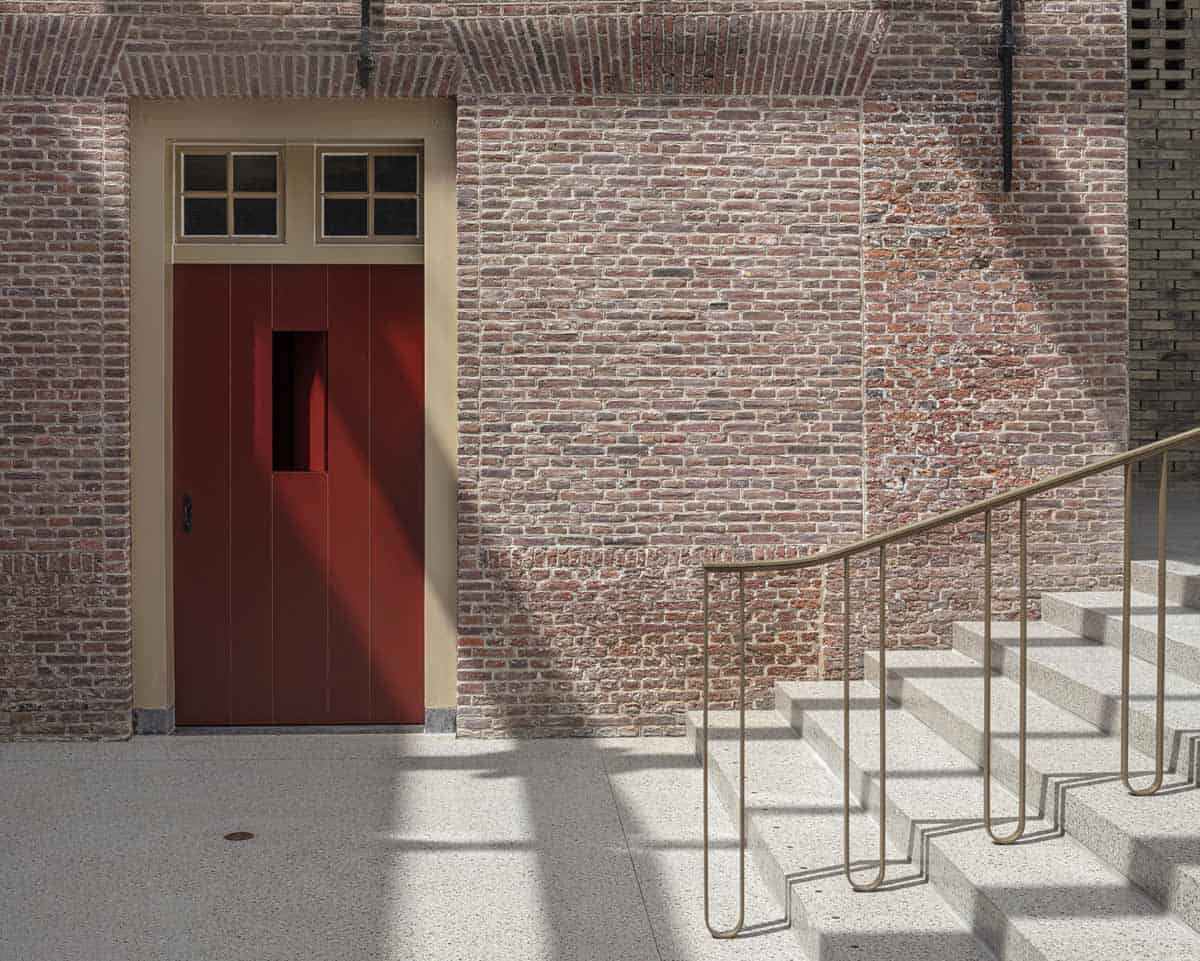
- Higher educationThe University of Sussex facade carries VeroMetal copper with a green patina on Ozeon® panels.
- Retail and commercialThe Tommy Hilfiger store facades use VeroMetal brass with a custom patina on aluminium substrates.
- HospitalityHotel Motto Vienna applies VeroMetal across signature interior elements at full hospitality scale.
- Residential and yachtPrivate residences, architectural staircases and superyacht interiors, where facade weight and interior load both matter.
VeroMetal, exhibition surfaces, Museum De Lakenhal
Architecture Design With VeroMetal: Common Questions
What is architecture design with VeroMetal?
Architecture design with VeroMetal® is the use of a real metal liquid coating as the visible surface of facades and interiors. VeroMetal contains genuine bronze, copper, brass, zinc, iron or manganese particles, applied at 120 to 150 microns. Architects specify it to deliver authentic metal on substrates that could not carry solid sheet metal.
How is VeroMetal applied to architectural surfaces?
VeroMetal® is applied by certified applicators using spray gun, roller, palette knife or pour, with no heat, welding or specialist metalworking equipment. The coating is applied to prepared substrates at 120 to 150 microns, cures at room temperature, and is then ground, brushed or polished to match the architecture design brief.
Which metals are available in VeroMetal for architecture design?
VeroMetal® offers real metal coatings in bronze, aged bronze, copper, brass, yellow brass, brown brass, gold, champagne, rose, zinc, iron, aluminium, nickel-silver, manganese, gunsmoke, tin and white bronze. Architects select from this palette to align the architecture design with the project's colour temperature and intended patina behaviour.
Can VeroMetal be used on curved and complex architectural geometries?
Yes. VeroMetal® is applied as a liquid, so it follows curved, perforated and three-dimensional geometry that solid sheet metal cannot economically form. Architects use VeroMetal on parametric facades, sculptural columns, sweeping bar counters and bespoke joinery where the design intent calls for continuous real metal without visible joints.
How much lighter is VeroMetal than solid sheet metal cladding?
VeroMetal® reduces architectural surface weight by up to 90 percent compared with solid sheet bronze or copper cladding. A VeroMetal surface weighs approximately 0.5 kg/m². That difference removes the structural reinforcement, brackets and fixings that carry the dead load of traditional sheet metal cladding.
Does VeroMetal patinate like solid metal?
Yes. VeroMetal® contains real metal particles at the visible surface, so it patinates as solid metal does. VeroMetal Copper develops a natural green carbonate layer over roughly 5 to 15 years of atmospheric exposure, and VeroMetal Bronze develops the warm to deep brown patina that defines aged bronze in architecture.
Which architecture design projects have used VeroMetal?
VeroMetal® has been specified for the Louvre Abu Dhabi display cabinets, Hotel Motto Vienna, Museum De Lakenhal, the University of Sussex, the Tommy Hilfiger store facades and the Rabobank facade panels in VeroMetal Gunsmoke. Private residences, restaurants, retail flagships and superyacht interiors also carry VeroMetal surfaces.
Who applies VeroMetal on architecture design projects?
VeroMetal® is applied by certified applicators trained in the cold-application process, mix ratios and finishing techniques. Architects, contractors and project developers specify VeroMetal directly with the certified applicator network, which keeps coating thickness, surface quality and documentation consistent across facades and interior elements.
Specify VeroMetal For Your Next Architecture Design Project
Architects, interior designers, contractors and project developers can request VeroMetal® samples, technical data sheets and certified applicator referrals for facades, interiors and bespoke architectural elements.