
Interior Design Material
Interior Design Material
VeroMetal® is an interior design material made of genuine metal particles bound in a cold-workable matrix. Applied at 120 to 150 microns to walls, joinery, panels and architectural elements, it gives architects and interior designers an authentic bronze, copper, brass, zinc or manganese surface on virtually any substrate, at approximately 0.5 kg/m².
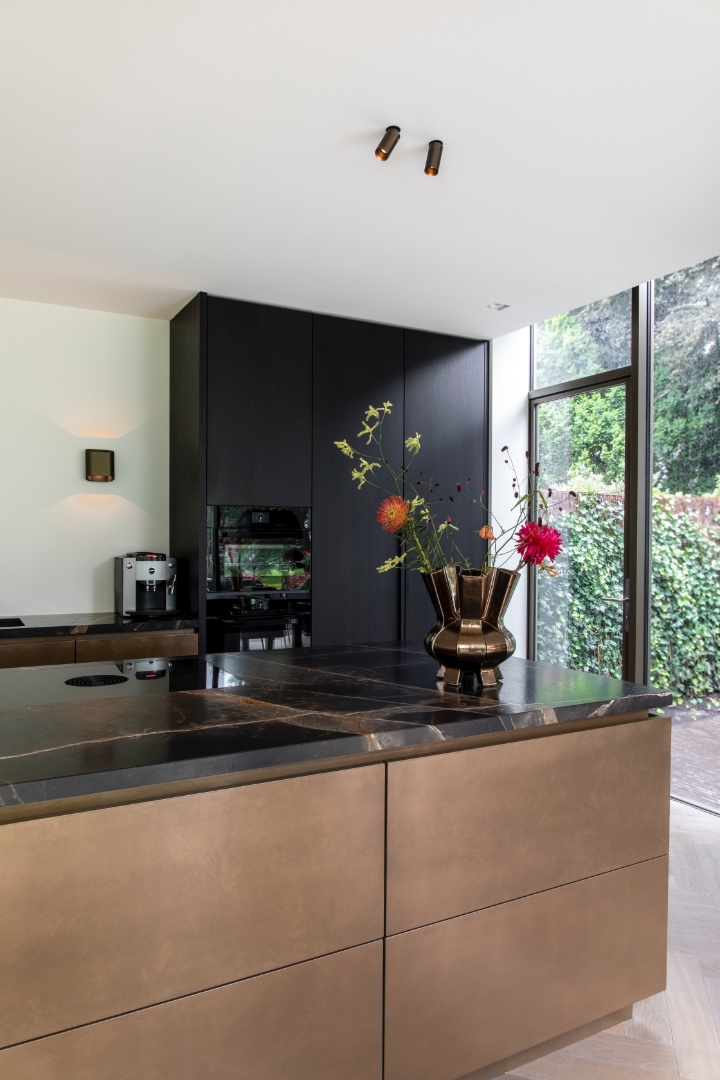
VeroMetal Bronze, kitchen surfaces, IJsselstein
What Makes VeroMetal A Distinct Interior Design Material?
Most metal-look surface products simulate metal without containing any. Foils, laminates and metallic paints rely on pigment and optical effect. VeroMetal® is materially different: the coating consists of real metal particles suspended in a cold-workable resin binder, so the finished surface is metal at the point where it is seen and touched.
That composition means VeroMetal® behaves like metal after it cures. The surface can be sanded, polished, patinated and oxidised with standard metalworking techniques. VeroMetal Bronze develops authentic verdigris, VeroMetal Copper takes on warm oxidation tones, and VeroMetal Iron develops a rust patina when left unsealed. No metallic paint reproduces any of that ageing.
How Is VeroMetal Applied As An Interior Design Material?
VeroMetal® is applied by certified applicators using four methods: spray gun, roller, palette knife or pour. Each method produces a different surface character. VeroMetal cures at room temperature and needs no ovens or hot-work permits, so contractors can apply it on site during a phased fit-out, even inside an occupied building.
Mix
Genuine metal particles are combined with a cold-workable binder to form the chosen metal in liquid form.
Apply
Spray application creates smooth, continuous surfaces across walls and cabinet fronts. Palette knife application builds visible texture, veining and depth for sculptural elements and bespoke joinery.
Cure and finish
The coating cures at room temperature, then the surface is sanded and polished and, if the brief calls for it, patinated or sealed to reach its final character.
Which VeroMetal Finishes Work As Interior Design Materials?
VeroMetal® offers more than fifteen real metal finishes as interior design materials. Interior designers typically pair one primary metal with one supporting metal from the same range, so the material language stays coherent from kitchen to staircase to feature wall.

Bronze
The classic warm interior material. Bronze suits kitchens, fireplace surrounds, hospitality joinery and museum-grade display work.

Copper
A warm, reddish material that develops natural oxidation tones over time. Copper is widely used in kitchens, bathrooms and hospitality bars.

Brass
Brass and yellow brass define contemporary schemes, mid-century revival interiors and signature reception architecture.

Gold
Gold and champagne deliver luxury palettes for ceilings, reflective wall planes and high-end hospitality interiors.

Zinc
A cool grey tone for modern, minimalist and design-forward interior schemes.

Tin
A pale, subtle grey with a quiet sheen, elegant on furniture, wall panelling and fine detailing.

Manganese
Manganese and Gunsmoke are the dark, near-black materials used on staircases, lift cores and minimalist feature walls.

Iron
A raw, industrial material for adaptive reuse, loft conversions and warehouse interiors. Iron develops a living patina through exposure.
Real metal where solid metal cannot go. An interior design material that follows the geometry of the design instead of forcing the design to follow the metal.
Interior Design Materials: VeroMetal vs Solid Sheet Metal
Interior designers specifying metal as a surface material choose between three routes: solid sheet metal, metallic paint, and a real metal coating. Metallic paint contains no metal and is discounted here on material grounds. The genuine comparison is between sheet metal and VeroMetal®.
VeroMetal As Interior Design Material
Real metal coating- Real metal composition, approximately 0.5 kg/m² at 120 to 150 microns.
- Bonds to plasterboard, MDF, plywood, concrete, stone, tile, fibreglass and glass.
- Follows curved and complex profiles without specialist fabrication.
- Continuous surfaces with no visible joints across walls, joinery and stairs.
- Applied on site by certified applicators, including in occupied buildings.
- Develops authentic patina and can be sanded, polished and oxidised.
Solid Sheet Metal Cladding
Traditional cladding- Real metal, but many times heavier for a comparable surface.
- Requires structural support, brackets and fixings for heavy panels.
- Curved and complex profiles need specialist off-site fabrication.
- Seams and joints interrupt the reading of a continuous surface.
- Higher installation cost and a longer lead time on bespoke elements.
- Develops authentic patina in the same way as a real metal coating.
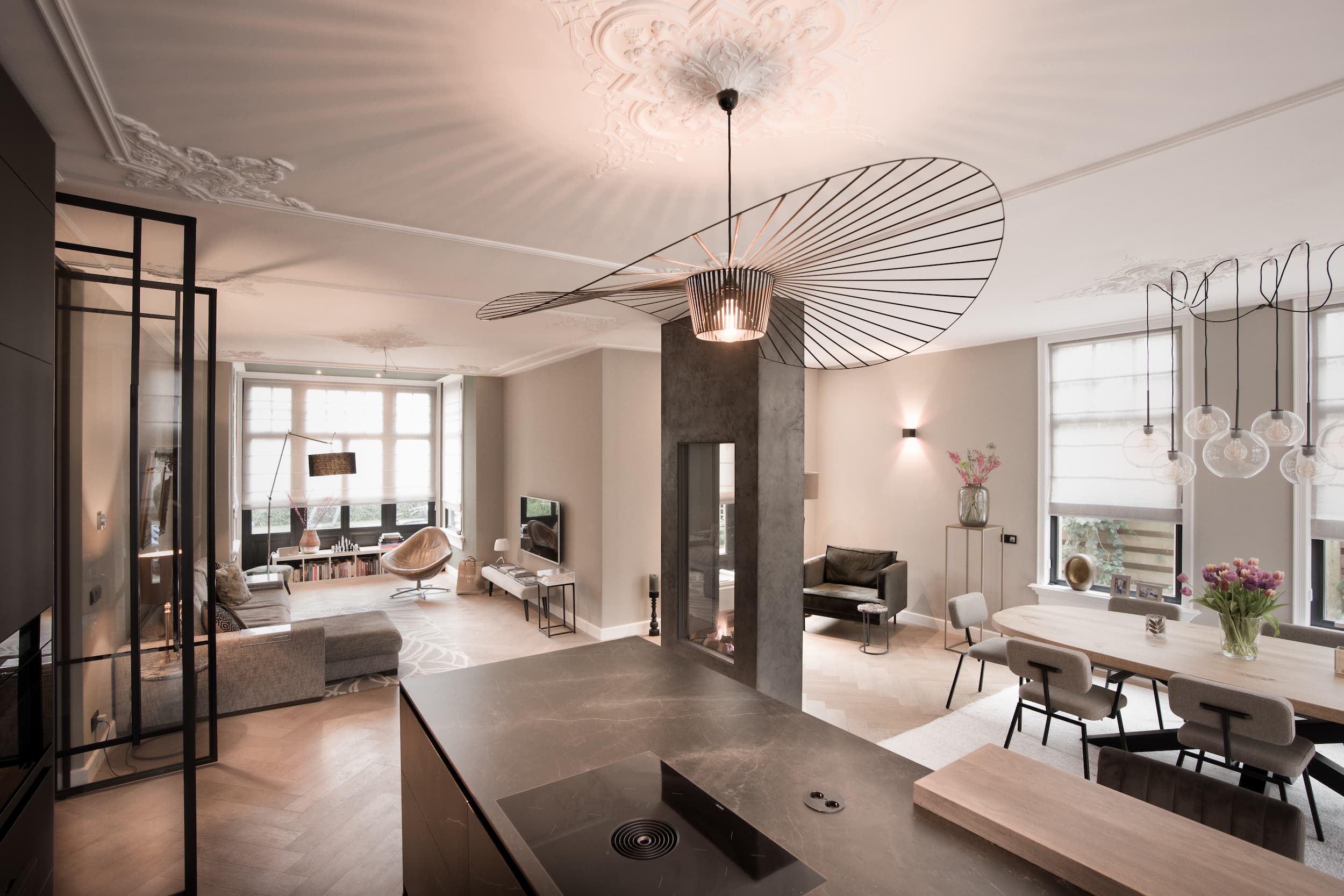
VeroMetal Manganese, fireplace surround
Which Surfaces Can VeroMetal Be Applied To?
VeroMetal® bonds to a wide range of substrates, which makes it one of the most flexible interior design materials available. Because it bonds to what is already there, interior designers can specify it on refurbishment projects without replacing original walls, joinery or built-in elements.
- Plasterboard and plasterWalls and ceilings in both new-build and renovation projects.
- MDF and plywoodFurniture, cabinet fronts, shelving and wall panelling.
- ConcreteArchitectural concrete walls, floors and structural elements.
- Stone and tileExisting tiled or stone surfaces in kitchens and bathrooms.
- Fibreglass and GRPDecorative objects, columns and shaped architectural elements.
- Glass and metalRe-coating or overcoating existing surfaces. Curved and complex profiles are possible, which rigid cladding systems cannot follow.
How Do Architects And Interior Designers Specify VeroMetal?
Specifying VeroMetal® involves three decisions: the metal finish from the VeroMetal range, the application method, and the finishing treatment. Sealed surfaces hold their appearance under routine cleaning; unsealed surfaces are left open so the metal patinates naturally over the life of the interior.
- Who specifies itArchitects, interior designers, project developers, contractors and OEMs.
- Who applies itCertified applicators trained through the VeroMetal training and certification programme, which keeps coating thickness and surface quality consistent across projects.
- Where it is provenCompleted projects include the Louvre Abu Dhabi display cabinets, Hotel Motto Vienna, Museum De Lakenhal and the University of Sussex.
- What to requestPhysical samples, technical datasheets and project references, so the finish and texture can be assessed before specification.
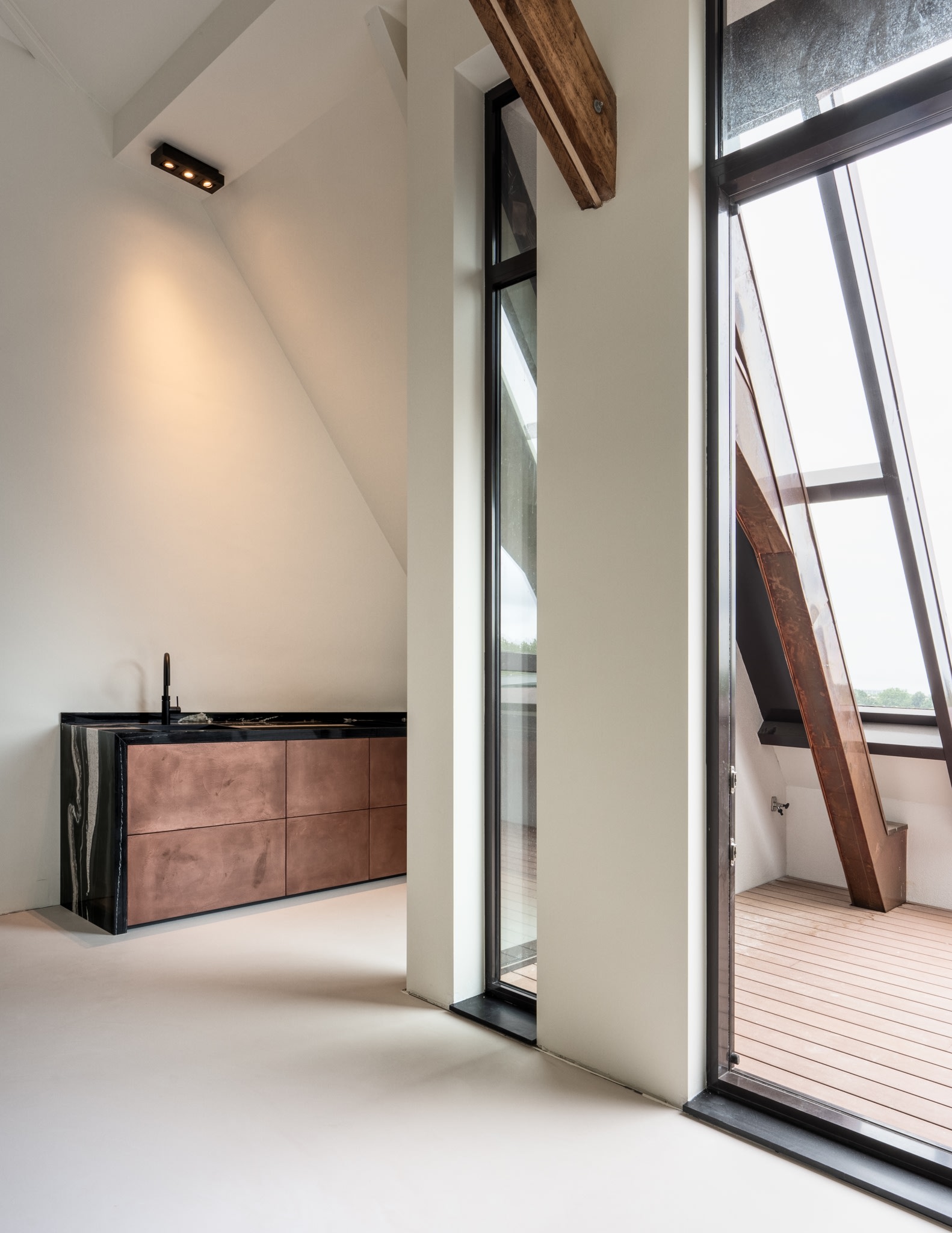
VeroMetal Copper, kitchen interior, Utrecht
Interior Design Material: Common Questions
What is VeroMetal as an interior design material?
VeroMetal® is a liquid metal coating containing real metal particles: bronze, copper, brass, zinc, iron and more. It is applied directly to walls, furniture, panels and architectural surfaces at 120 to 150 microns. Architects and interior designers use it as an alternative to sheet metal cladding, delivering genuine metal surfaces on almost any substrate.
How does VeroMetal differ from metallic paint as an interior design material?
VeroMetal® contains real metal particles; metallic paints do not. That difference means VeroMetal surfaces look, feel and age like genuine metal. They develop authentic patina, can be polished or oxidised, and have real texture and depth. Metallic paint produces a simulated appearance that does not age and cannot be worked as metal.
Which interior design applications is VeroMetal most suited to?
VeroMetal® is most commonly specified for kitchen cabinetry, feature walls, fireplace surrounds, staircases, bar counters, reception desks and bespoke furniture. The coating suits any surface that can receive a primer coat. It is used equally in residential interiors, hospitality design, retail fit-outs and cultural or institutional projects.
Is VeroMetal durable enough as a primary interior surface material?
Yes. VeroMetal® is used in demanding environments including the museum display cases at the Louvre Abu Dhabi and the hospitality interiors at Hotel Motto Vienna. A sealed VeroMetal surface is abrasion-resistant and holds its appearance under routine cleaning. Unsealed surfaces are specified when natural patina development is part of the design intent.
Can VeroMetal be applied to curved or existing surfaces?
Yes. VeroMetal® is applied as a liquid, so it follows curved and complex profiles that sheet metal and rigid cladding systems cannot. It also bonds to existing plasterboard, concrete, stone, tile, MDF and glass, which allows interior designers to re-surface a renovation without stripping out the original elements.
How heavy is VeroMetal compared with sheet metal cladding?
A VeroMetal® surface weighs approximately 0.5 kg/m² at an applied thickness of 120 to 150 microns, roughly 0.12 to 0.15 millimetres. Solid sheet metal is many times heavier for the same area and needs structural support, brackets and fixings. As an interior design material VeroMetal adds negligible load to walls, ceilings and joinery.
Can interior designers order samples of VeroMetal material?
Yes. Interior designers, architects and project developers can request VeroMetal® samples to assess the finish, texture and weight of each metal before specifying it. Sample requests and technical documentation, including datasheets, are handled through the VeroMetal website and the certified applicator network.
Specify VeroMetal For Your Next Interior Project
The VeroMetal® team supports architects, interior designers, developers and OEMs from material selection through to certified application. Request samples, datasheets or a project consultation.